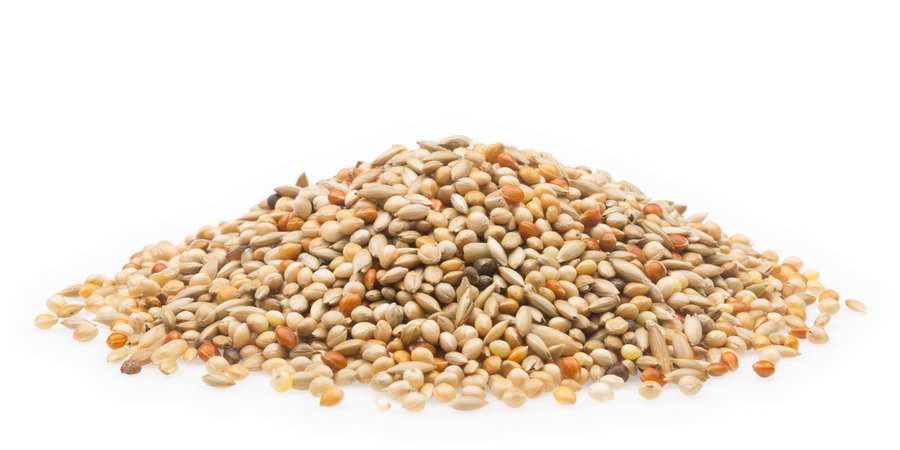
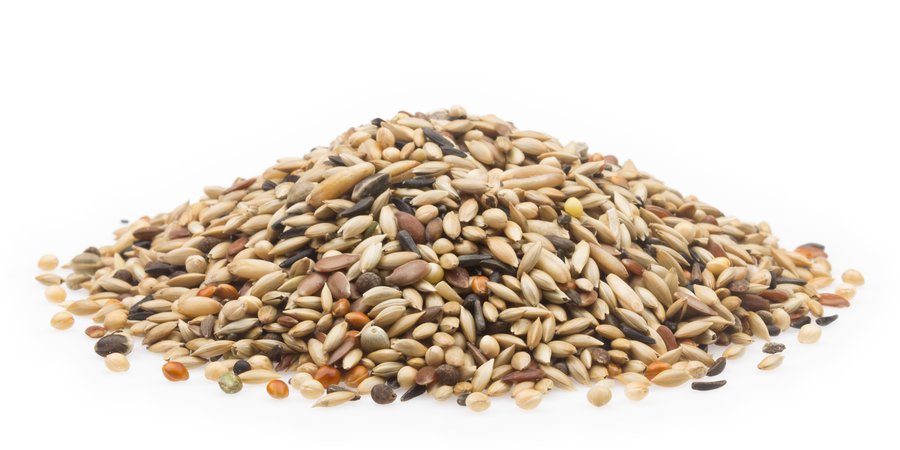
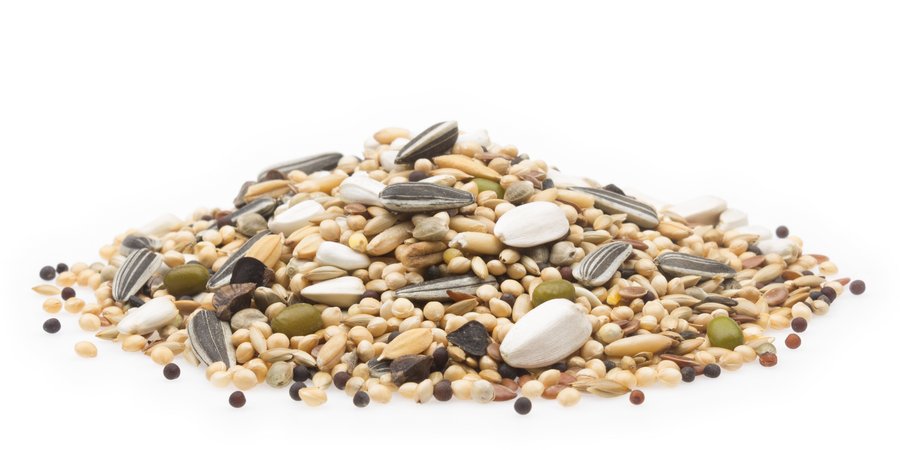
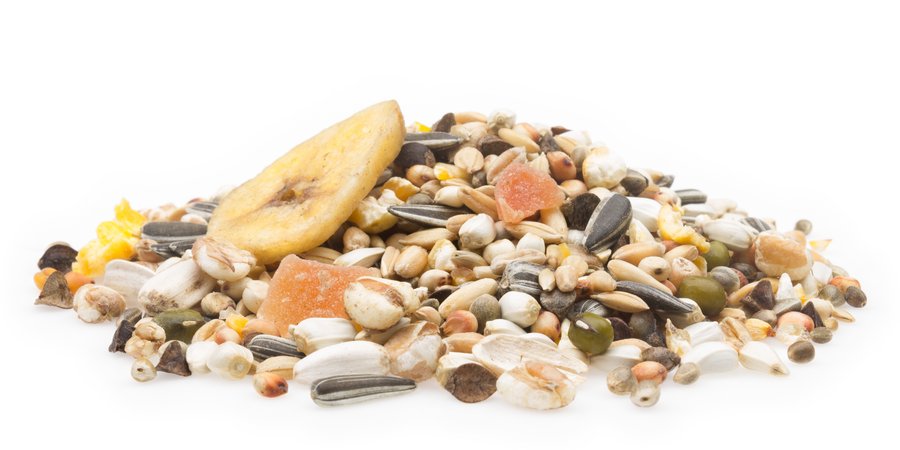
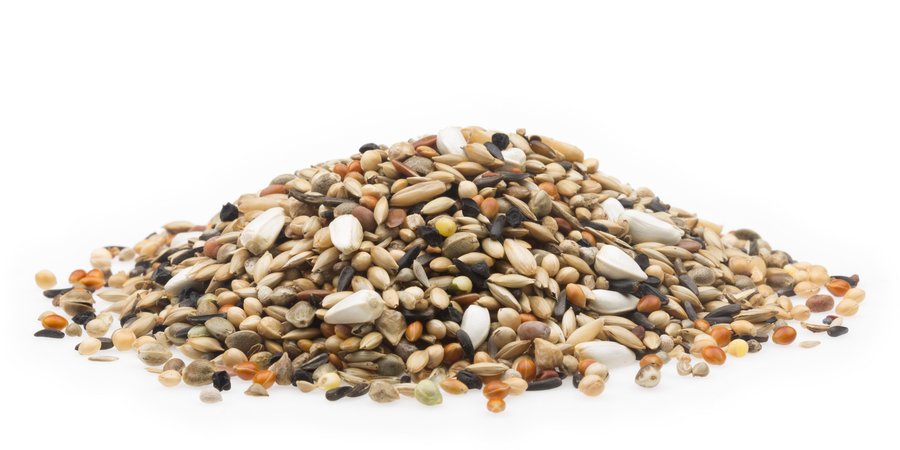
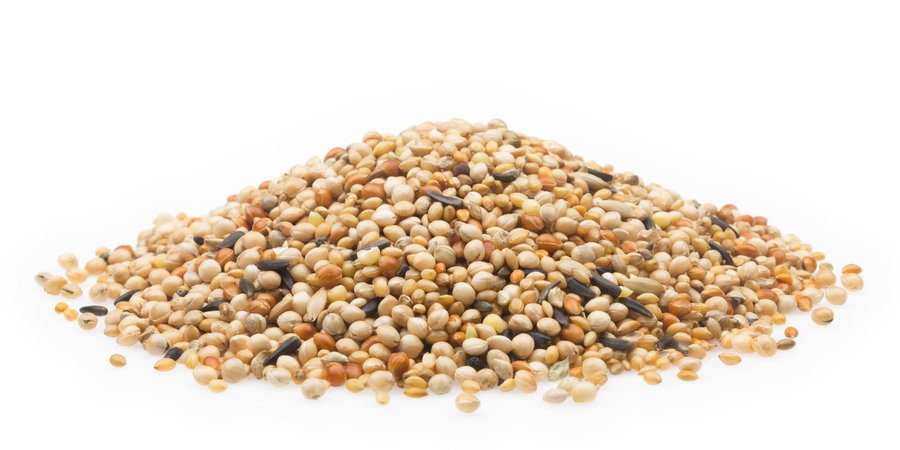
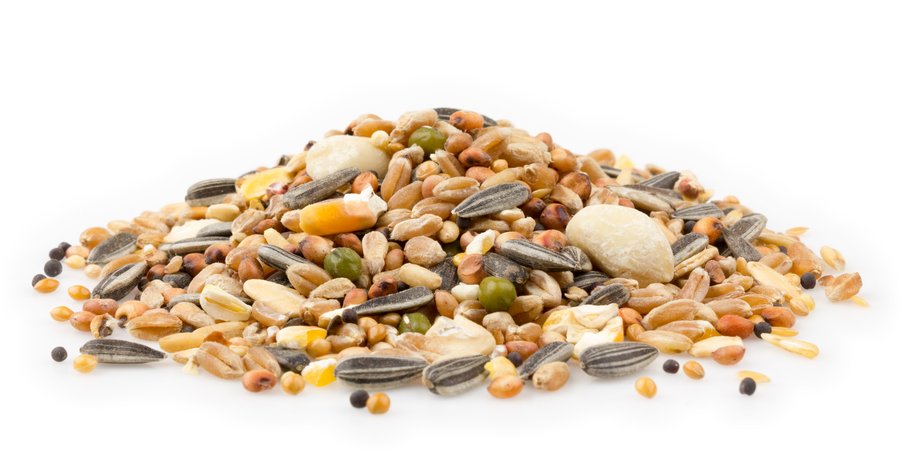
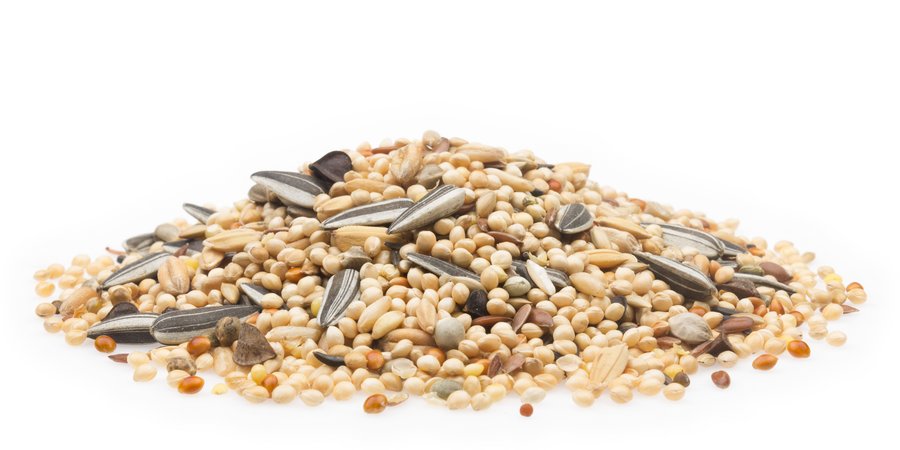
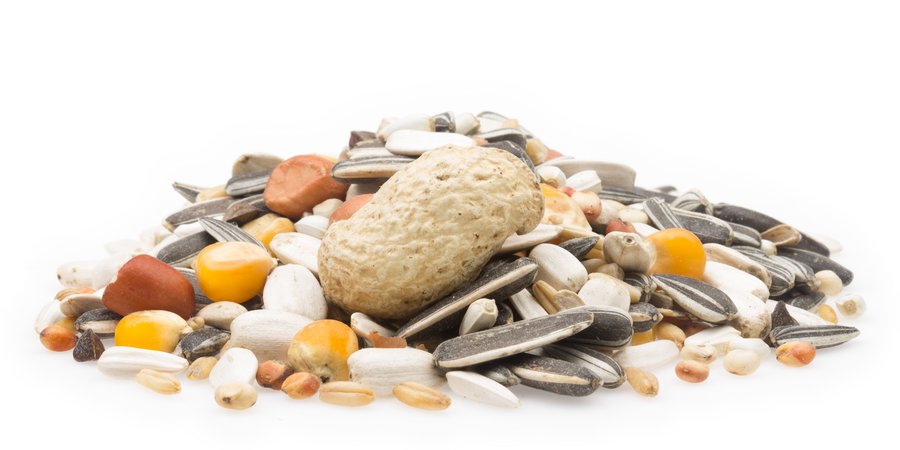
Ornamental birds, garden birds, and wild birds are well provided for with our bird food, as we offer a wide variety of high-quality bird foods for different bird species. Whether you keep and breed ornamental birds such as parrots, budgerigars, canaries, etc., or you want to feed wild and garden birds on your balcony, terrace, or garden, we have the right bird food on offer.
Birds like budgerigars, canaries, cockatiels, large parakeets, parrots, exotics, finches, and other bird species are well provided for with our species-specific seed food. Seeds, kernels, grains, oatmeal, sunflower seeds, fine seeds, and many other seeds make our bird food a diverse and balanced mix. The birds benefit from the gentle processing of our bird food, its natural content of vitamins and trace elements, and the fats and minerals it contains. The bird foods are composed to cater to the species-specific preferences and needs and to optimally provide for the animals.
Wild and garden birds are optimally provided for in summer and winter with our bird food, such as the Wild Bird Terrace Mix or our Wild Bird Annual Mix, regardless of the season. We recommend year-round feeding of garden and wild birds with our bird food. This compensates for the natural fluctuations in food supply, and you can enjoy a large bird population in your own garden. The birds are also safely provided with food during the breeding season. The current variety of increasingly species-poor gardens and the associated low insect population make feeding native birds with special bird food increasingly meaningful.
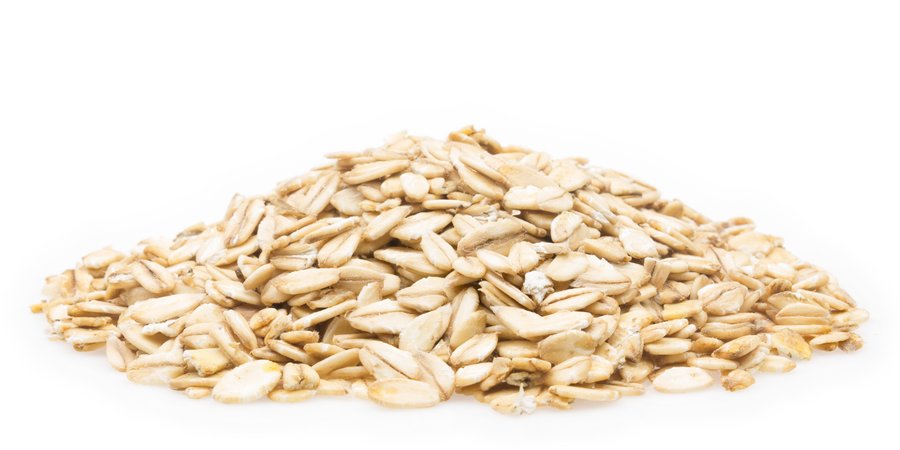
Sunflower seeds are the basic food for native bird species. Seed eaters like tits, finches, and sparrows particularly prefer these. Robins, dunnocks, wrens, blackbirds, and starlings are pure soft food eaters. In addition to very fine seeds, they also prefer oatmeal and small/crushed nuts. To adequately provide for both seed and soft food eaters, it is important to offer an appealing and versatile bird food for both groups. Our two wild bird foods offer a rich food supply for both seed and soft food eaters: fatty seeds, kernels, and grains, such as sunflower seeds, linseed, rapeseed, millet, milo, and oat kernels/flakes are available to them as food.
The shape of the beak is crucial for the birds' food intake. Soft food eaters have a delicate, pointed beak. They enjoy bird food with crushed nuts and oatmeal. Seed eaters have a strong, rather short beak, with which they can effortlessly break the shell of small grains or nuts. These bird species require bird feeding that takes this aspect into account.
Food for various bird species can be made from different individual components. However, it must first be clarified which bird species is to be fed. Then, two to three individual seeds are selected, taking into account the preferences of seed and soft food eaters. These can also be offered unmixed. You will quickly see which component is particularly preferred. You will find a range of individual components with us from which you can assemble the food.
From our oatmeal, you can easily make your own bird food for soft food eaters, such as the blackbird. Especially in winter, such a supplementary food enriches the sparse food supply of the season. To do this, mix them with fine seeds, cereal flakes, and bran. In winter, you can supplement this food with tallow to make a delicious fat food—depending on the composition for soft or seed eaters. Please note that fat balls in plastic nets pose more danger than benefit to garden birds. The birds can easily get tangled in the nets with their claws and, in the worst case, even die. Fat balls are therefore a food that should be avoided. A sensible alternative can be homemade fat balls or bird food bells. You can easily make these yourself with a fat of your choice and a mixture of selected individual components or our ready-made wild bird food.
After you have dealt with the feeding preferences of the individual bird species, it is now important to take a closer look at the feeding places. Different bird species prefer different places for feeding. Some species, such as the blackbird or the dunnock, like to eat their food from the ground. Tits, finches, and sparrows, on the other hand, prefer to eat their food from elevated places. In addition to numerous birdhouses and hanging feeding places, there are special ground feeders. Sufficient hygiene must also be ensured: neither should the food spoil nor be contaminated by debris. This often happens when the area on which food is offered is quite large and the birds walk through the food or contaminate it with droppings. The place where you distribute the wild bird food must be regularly cleaned by you. Then nothing stands in the way of bird feeding as a nature experience.