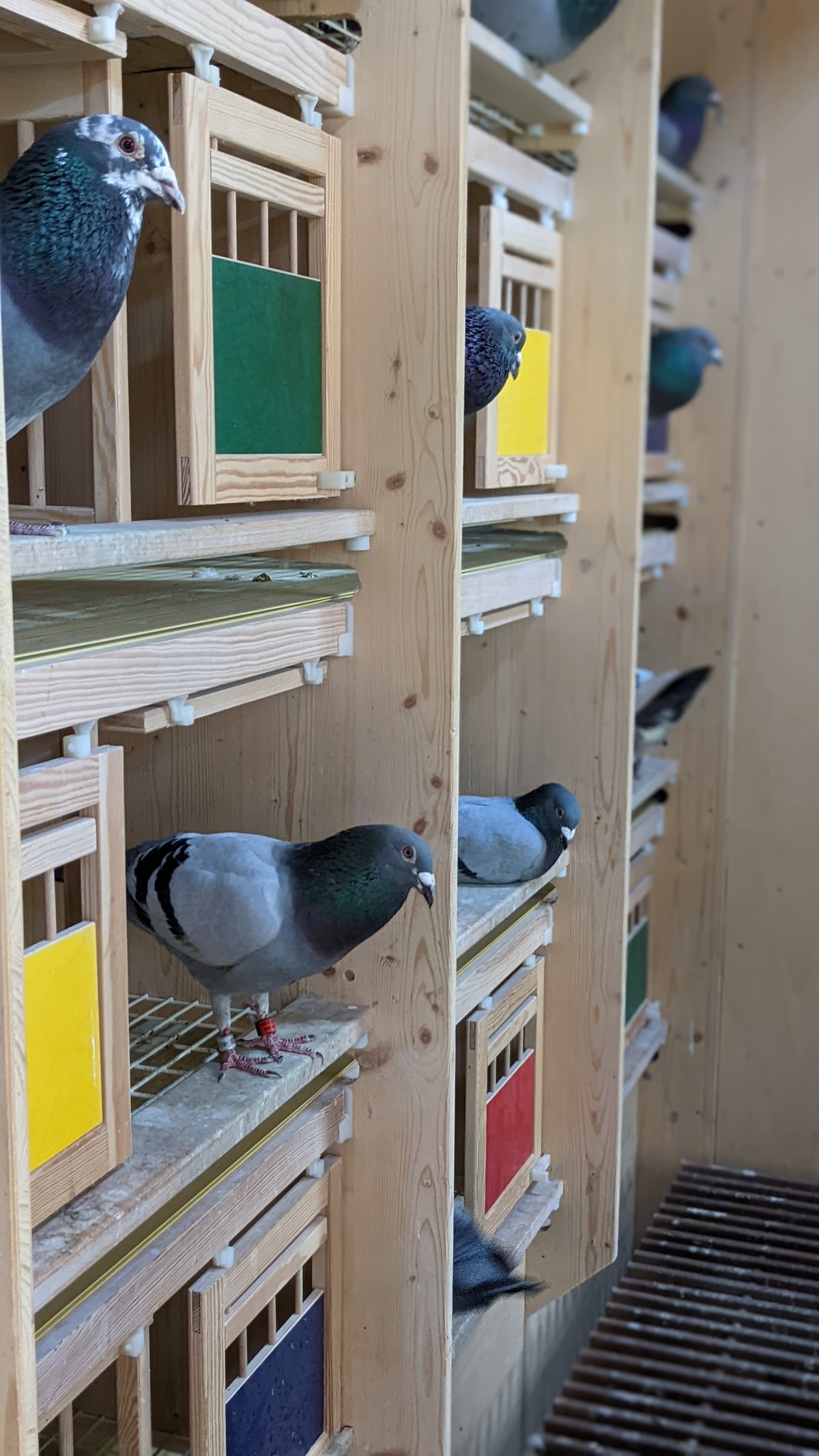
As an active pigeon breeder, I know from personal experience how demanding the travel season is for our pigeons and for us breeders. During this time, many factors interlock. Training, regeneration, feeding, and a clear system in the loft. In this post, I would like to share my thoughts and experiences on the preparation and care of the pigeons during the travel season and show what I believe is particularly important so that our pigeons can perform week after week.
Preparation and Training in the Travel Season
The travel season is the phase each year that shows how well preparation, care, and system really fit together. During this time, our carrier pigeons become true athletes. To ensure they can perform week after week, training, regeneration, and feeding must be precisely coordinated. Feeding plays a central role in this, as it determines how quickly the pigeons recover and how much energy they can build up for the next race.
At the beginning of the season, it is important that the pigeons train well at home. They should loosen up, fly long rounds, and ideally stay in the air for up to an hour. This training forms the foundation for the condition of the entire season. When the pigeons fly together, move away from the loft, and train with joy, it is usually a good sign of their fitness.
As the season progresses, however, the training should be adjusted. Especially after strenuous or long flights, it is advisable to give the pigeons a little more rest. After this recovery phase, the training sessions can become a bit more intense again, while towards the end of the week they should be kept shorter so that the pigeons go into the race with fresh strength.
The Right Feeding During the Journey
At least as important as training is a well-thought-out feeding plan throughout the week. After a race, regeneration is initially the focus. The pigeons have expended energy and their muscles have been heavily strained. In this phase, they need easily digestible food and sufficient protein for recovery. Lighter mixtures such as Reise Light or Relax from Mifuma's program, which contain a higher proportion of easily digestible components, have proven effective. These mixtures support the organism in stabilizing after the flight and replenishing the depleted reserves.
After returning from the race, water intake is also of great importance. During a race, pigeons lose a lot of fluid. Fresh drinking water should therefore be available immediately upon return. Many breeders also work with electrolytes or vitamins in the drinking water during this phase to quickly compensate for fluid and mineral loss and support regeneration.
Continuous supply of minerals is equally important. Fresh grit and minerals, such as Oremin, should be freely available to the pigeons daily, as they stabilize the mineral balance and support healthy digestion.
Over the course of the week, the pigeons' needs change significantly. While recovery is still the focus at the beginning, energy for the next race must increasingly be built up from midweek. Now more energy-rich feed mixtures are used. Mixtures such as Elite Racing, Power-Mix, or Energy from Mifuma's range have proven particularly effective here. They contain more energy-rich components such as corn and oilseeds and help fill the pigeons' carbohydrate and fat reserves. The closer the deployment day approaches, the stronger the proportion of these energy-rich mixtures should be. Many successful breeders feed almost exclusively such performance-oriented mixtures towards the end of the week to give the pigeons enough strength for the flight.
The last feeding before deployment also needs to be well thought out. Ideally, the pigeons should be fed to satiety the evening before deployment. On the deployment day itself, however, the pigeons should not be overfed. An overly full crop means additional stress and thirst during transport. Easily digestible grains and quickly available energy sources are ideal here. It is also important that feed residues are removed from the loft in good time so that the pigeons do not overeat shortly before deployment.
Health and Daily Observation
In addition to training and feeding, the health of the pigeons remains a fundamental prerequisite for a successful travel season. Especially during the travel period, digestion and respiratory tracts should be regularly checked, as only healthy pigeons can fully perform in the race.
Daily observation of the animals is equally important. The behavior in the loft, the joy of training, and the overall impression of the pigeons give the breeder important clues as to whether the care is right. Attentive breeders recognize early when something changes and can react in time.
Consistency in the System as a Success Factor
During the season, larger feed changes should also be avoided as much as possible. The pigeons' metabolism adjusts to a certain feeding, and sudden changes can quickly lead to digestive problems or performance slumps. It is more sensible to stay within a proven system and only adjust the proportions of the mixtures over the course of the week. The coordinated travel mixtures from Mifuma enable such flexible yet consistent care.
In addition to training and feeding, the chosen travel system also plays a role. Some breeders continue to rely on the classic widowhood, while others are successful with total widowhood, where both birds and hens participate in the races. What matters less is the system itself than the consistency with which it is implemented. Those who constantly make changes during the season bring unrest into the loft. Consistency and a clear routine are usually the better way.
In the end, it always shows that successful travel seasons are rarely coincidental. They arise from a good interplay of training, rest phases, and feeding that consistently aligns with the pigeons' needs. Those who properly care for their animals throughout the week and provide them with a stable routine lay the foundation for healthy, high-performing pigeons and a successful season.
“Good flight”
Robert Maaß