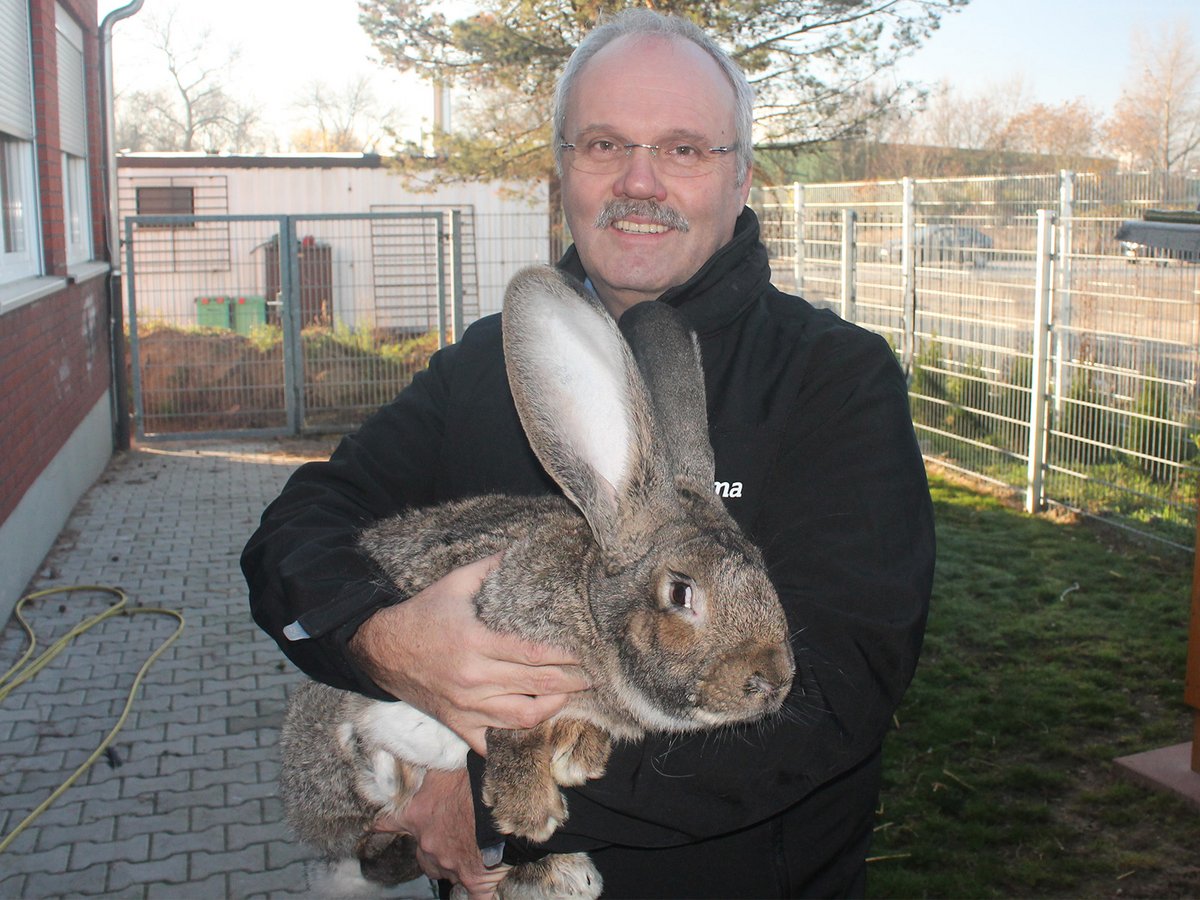
In conversation…
…with Jürgen Vedder about the impact of rising raw material prices on the feed market.
Empty supermarket shelves and rising prices, the raw material crisis in the food industry is intensifying. Breeders are also feeling this when purchasing feed for their animals. We spoke with Jürgen Vedder, Managing Director of Mischfutter Werke Mannheim GmbH, about the current situation on the feed market.
Mr. Vedder, feed costs for our rabbits are rising more and more. What is causing this?
Various factors influence price developments in our feed products. At the moment, the biggest issue is the availability of raw materials on the global market. The general shortage of raw materials, combined with strong global demand for limited resources, is driving prices up. It is important to understand that every raw material is traded and listed on commodity markets. All prices are fully traceable and transparent.
Why do you not simply buy locally?
We do whenever possible. However, harvests over the past two years have been poor on a global scale. Droughts, extreme weather, and the pandemic have all played a role. One might think buying from a local farmer avoids global market influences, but that is not the case. Local farmers are also aware of global prices and the value of their goods. If harvests in the USA are poor, buyers turn to the global market, which drives prices up. Fortunately, we work with many regional farmers, which helps secure supply, but it does not improve pricing.
What impact does the war in Ukraine have on prices?
Since February 24, the market situation has worsened significantly. The war in Ukraine and the associated sanctions against Russia have effectively removed nearly one third of global exports. These regions are key producers of European grain. As a result, already limited supplies have become even scarcer, and this situation is unlikely to improve in the near future.
Do you not secure prices and volumes through contracts when purchasing raw materials?
Of course, we establish contracts with our suppliers. These define quantities, delivery dates, and prices over the medium to long term. However, in times when prices are constantly rising, contracts are approached more cautiously. Many suppliers expect to achieve higher prices elsewhere, which makes agreements more difficult. We produce both bagged and bulk goods, and we calculate our raw material needs accordingly.
How flexible can you be in responding to changes in demand under current conditions?
Imagine a competitor increases prices or can no longer produce due to raw material shortages. Suddenly, you might receive ten times the usual daily order volume, while procurement can only react to a limited extent. We have to calculate everything very carefully at the moment. Raw material sourcing is extremely challenging, and otherwise you face excessively high purchase prices.
Can you give a concrete example?
Certainly. In March last year, maize cost €216 per tonne. By the autumn, prices had risen to around €250 per tonne. In just the last three weeks, maize prices increased by another 40 percent, reaching €350 per tonne. Soybean meal followed a similar trend, rising from €400 per tonne in March 2021 to €500 in autumn and now €590 per tonne. That is an increase of nearly 50 percent, and it is not the end yet. Even the cost of feed bags has risen by 30 percent, not to mention energy costs.
Even with contracts in place, you can imagine how quickly raw materials are depleted when production volumes increase unexpectedly. One might suggest adjusting formulations based on available raw materials, but for us that is not an option. We do not change our formulations. Quality remains consistent. Our customers must be able to rely on that.
What should we expect in the near future?
I can only speak for Mifuma. We will have to increase prices for rabbit feed by approximately €1.07 per 25 kg. Unfortunately, this is unavoidable. This will be our second price increase within two months, totaling €1.61 per 25 kg compared to January. I understand that many will find this difficult, especially as other living costs are also rising. However, given the raw material situation, we have no alternative. As soon as the market allows, we will reduce prices again.
Do you think Germany is too dependent on Eastern European raw materials?
No, I do not think so. Raw materials and their prices are traded globally. Ukraine is rightly referred to as the “breadbasket of Europe” due to its fertile soil and favorable climate. The same applies to Russia. This war, with its devastating consequences, could not have been predicted. And I do not just mean the grain market, but above all the human suffering. It remains to be seen whether Ukraine and Russia can move closer again. That will determine whether fields can be cultivated and crops sown for the coming year. Fertilizers are also currently in short supply. There are many uncertainties. The market will stabilize again, the question is when. However, it also means that we will not return to previous price levels anytime soon.
Mr. Vedder, thank you for the insightful conversation and your assessment of the current situation.
From Kaninchenzeitung 04/2022