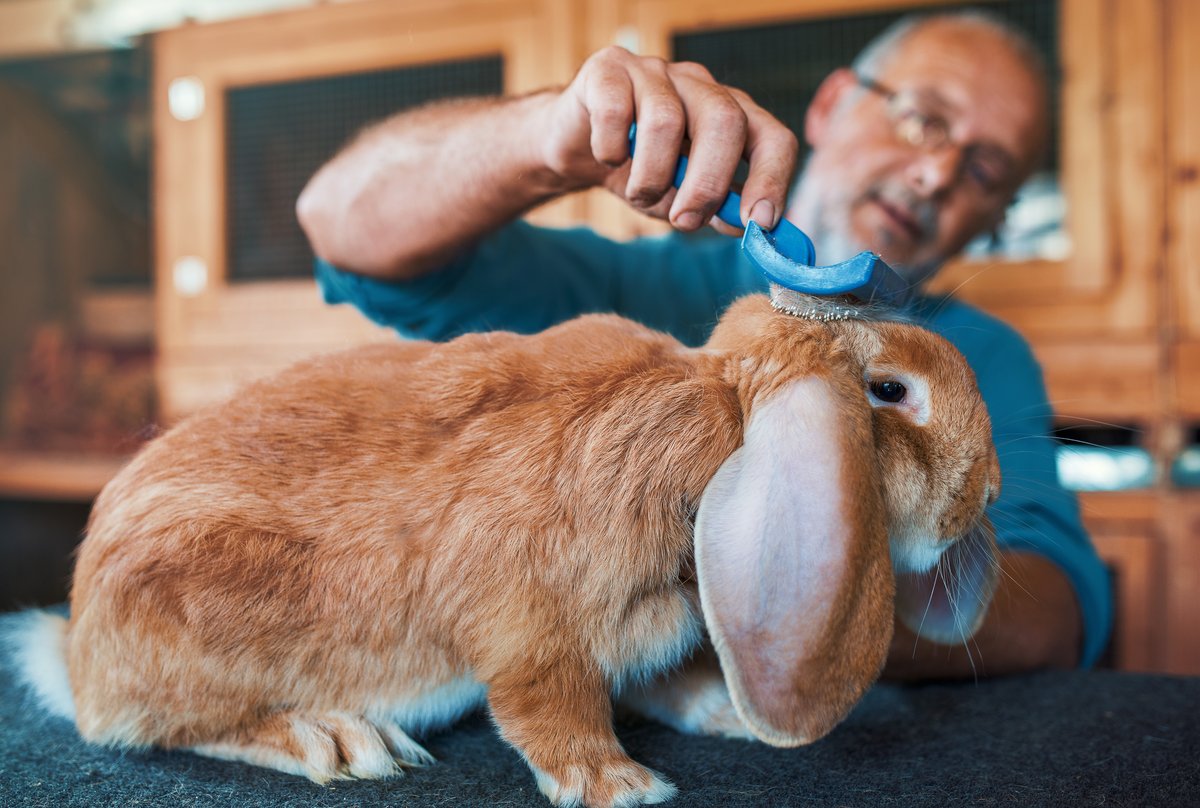
Among other criteria, the coat texture and color expression are also essential factors in the evaluation of pedigree rabbits at the show. To promote the development of a dense, shiny coat, it is important to provide the animals with all the necessary nutrients before molting.
COAT CHANGE
Healthy rabbits change their coat twice a year without noticeable problems. In the fall, the lighter summer coat is replaced by the winter coat. In spring, there is again a light coat for the warm days. During the coat change, rabbits shed differently depending on the breed. Some rabbits appear quite scruffy during the coat change phase due to a loose undercoat, and sometimes the coat becomes quite thin. However, healthy animals do not develop bald spots due to the hair change. Bald or scabbed spots are usually caused by a parasite or fungal infestation or by a deficiency due to improper nutrition. In addition to the specific nutrients and active ingredients directly involved in the formation of skin and hair, proper nutrition for the rabbit is also important.
AVOIDING DIGESTIVE PROBLEMS
Rabbits with a stable digestive system also have fewer problems with hairballs. Hairballs form when the fallen hairs are ingested into the gastrointestinal tract during grooming. There, they can lead to dangerous blockages. With strong accumulations of hair in the digestive tract, so-called "fecal chains" often occur. Here, the feces are held together by the hairs. For intact digestive processes in rabbits with their small stomach and long intestine with a functional cecum, the supply of certain crude fiber fractions through the diet is crucial.
SUPPORTING COAT DEVELOPMENT THROUGH FEEDING
Other nutrients play an important role in coat development. Of course, the animal must first be adequately supplied in general so that enough energy is available for the various metabolic processes. The most significant nutrient in terms of quantity is protein, which makes up 95% of the hair. A deficiency in protein or certain protein building blocks (amino acids) leads to changes in skin and hair, such as dandruff, fading of coat color, reduced hair growth, or thin, dull fur. The most important amino acids are methionine and cystine, which are involved in the formation of keratin, the main protein component of hair. A lack of keratin makes hair brittle quickly. The amino acids methionine/cystine are essential, meaning they must be ingested through food.
TRACE ELEMENTS AND VITAMINS FOR THE FINISHING TOUCH
Trace elements zinc, copper, and selenium have special significance for coat development. Zinc and selenium support hair growth, while copper ensures proper pigmentation. A deficiency in copper can manifest as color lightening. In addition to trace elements, various vitamins are also important for coat growth and quality. Vitamin A is used for the formation, protection, and regeneration of skin and mucous membranes. It is present in green fodder and carrots as a precursor (β-carotene). Vitamins of the B-complex, like copper, influence pigment formation. Undisturbed pigment formation and deposition in the growing hair shaft are crucial for the coloring of individual hairs. Vitamin E, known for its cell-protective function, improves the structure of the skin surface and moisture retention. Vitamin K promotes the synthesis of unsaturated fatty acids and is absorbed by rabbits both through food and cecal feces.
FATTY ACIDS FOR A HEALTHY, SHINY COAT
Dull fur and dry skin are typical of a deficiency in essential fatty acids. Particularly polyunsaturated fatty acids (omega-3 and omega-6 fatty acids) are an important nutrient for healthy and shiny fur. They were once referred to as "Vitamin F." They promote healthy skin, hair regeneration, and coat shine. In the past, to improve coat quality, feed was simply enriched with salad oil.
The positive effect of increased supply of essential fatty acids could be quickly measured by the enhanced coat shine. However, supplementing with oils poses the risk of significantly disrupting the rabbit's digestive system. Diarrhea often occurs, and the sensitive cecal flora is also thrown out of balance. In nature, rabbits consume food with relatively low fat content, and supplementing with oils contradicts a species-appropriate diet. Direct feeding of oil has also not proven effective in practice, as oil residues in troughs, stalls, and fur resulted in significant cleaning effort.
HIGH-QUALITY FEED SUPPLEMENT FOR BEAUTIFUL FUR
Our Linamix® is a high-quality supplementary feed for improved supply of important fatty acids, especially during the coat change. Linamix® is a grain-free and particularly energy-rich extrudate made from linseed with a naturally high content of omega-3 fatty acids to promote natural coat shine. In combination with a prebiotic, it supports a stable digestive system in rabbits. By additionally providing Linamix® during the molting period, coat quality is significantly improved. The long-chain fatty acids stimulate digestion, support the immune system, and promote coat shine.
You can find Mifuma Linamix® at your Mifuma dealer and in our online shop at www.mifuma-shop.de!