Preparation and Care
In the breeding loft, an important foundation for success in pigeon racing is laid. Only healthy and well-prepared pigeons should be used for breeding, as the goal is to ensure healthy offspring. Therefore, a few preparations should be made before pairing to ensure success.
- Health Check: A fecal sample examination by the veterinarian provides security. Vaccination against paramyxovirus is mandatory and should be completed at least four weeks before pairing the pigeons.
- Switch to Breeding Feed: About a month before pairing, the pigeons should be provided with protein and nutrient-rich breeding feed (e.g., Breeding + Molting Special Class, Premium or Classic). This promotes fertility and strengthens condition.
- Light Management: For winter pairings, a daily light supply of 14 hours helps to promote the breeding mood.
- Additional Support: Supplements like Röhnfried Gervit-W or Taubenfit E-50 improve breeding form and increase chances of success.
After pairing the couples, the cocks quickly drive their hens to the nest. Nesting material should be sufficiently available to increase comfort. Grit and minerals (e.g., Oremin, Vital-Power-Grit, Edelgrit) are essential and should be renewed daily.
Important: Calcium ensures stable eggshells. Phosphorus and magnesium promote the development of chicks in the egg and bone growth.
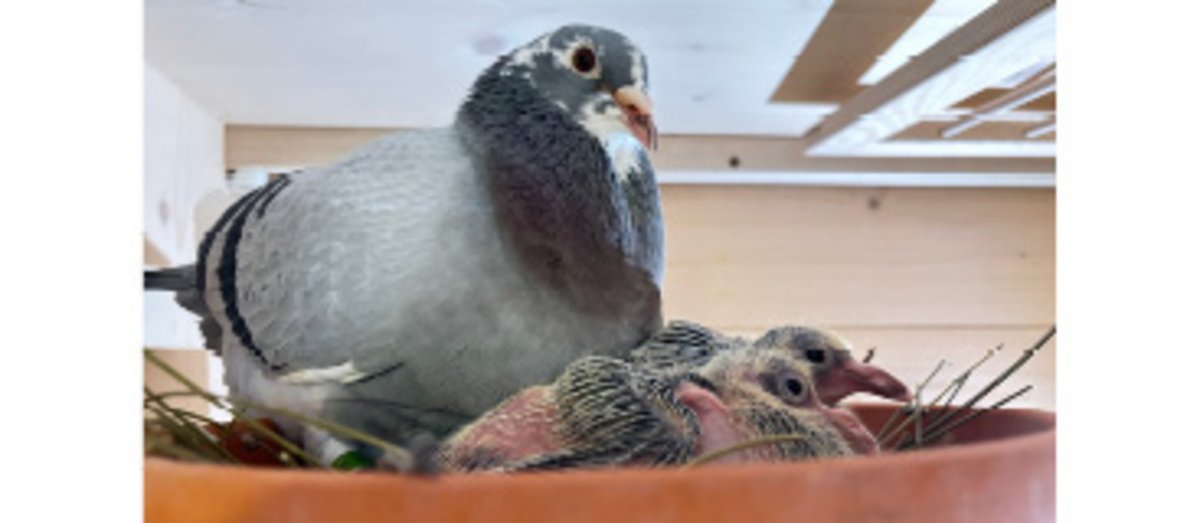
Incubation and Young Pigeons
If you have prepared your pigeons in this way, nothing should stand in the way of successful breeding. Experienced breeders have their routines that they use during this phase. Here are a few tips:
- Laying Eggs: About 8 to 10 days after pairing, the hen lays the first egg. After a day's break, the second egg follows, after which the incubation period begins.
- Keep an Overview: Label the eggs or note the laying date to better plan the hatching. After 5 to 6 days, the egg can be candled with a lamp to check fertilization (fine veins and a dark embryo are good signs).
- Clutch Control: Regular but gentle control of the clutch helps to identify potential problems early.
After 17 to 18 days, the young birds hatch.
- Feeding the Chicks: In the first two weeks, the parent birds feed the chicks with crop milk, a nutrient-rich substance that strengthens the immune system and promotes rapid growth. The nutrient requirement is sufficiently covered.
- Ringing: After 5 days, the chicks should be ringed - the optimal time should not be missed as the young develop rapidly.
- Fledging: After 30 days, the young birds are fledged and can be moved to the young bird loft.
Conclusion: Successful breeding begins with good preparation, healthy animals, and optimally coordinated care. Through careful control and the right nutrition, you lay the foundation for healthy, high-performing pigeons and a successful breeding season.