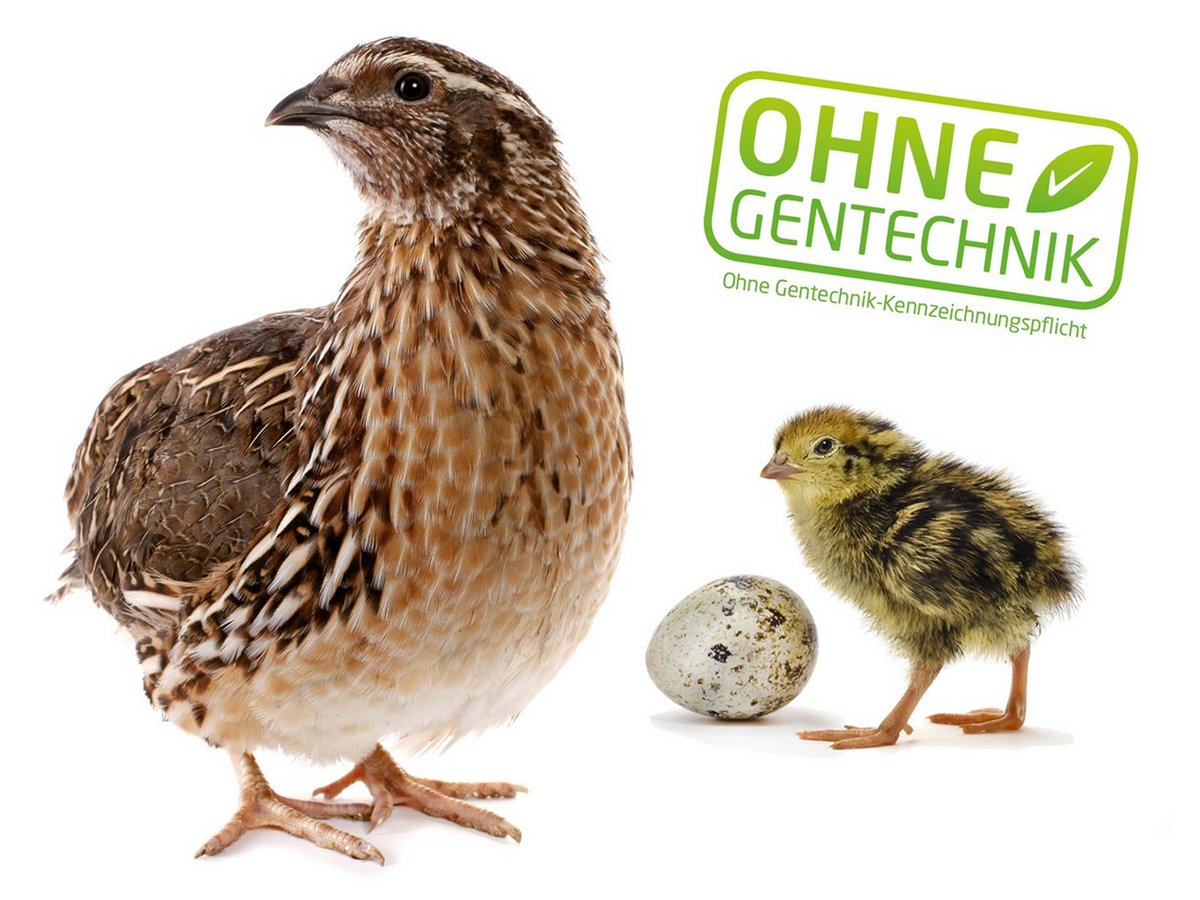
Keeping quails in your own garden is becoming increasingly popular. These small birds delight both young and old – and we are big fans of quails too. However, as with any animal, it’s important to gather enough information before bringing them home, as this small type of poultry can be quite demanding.
How do I keep quails?
The decision has been made: “We want to keep quails!” But how should they be housed? In a coop or a cage, indoors or outdoors – and how can you make their environment as comfortable as possible?
Quails are usually kept in outdoor aviaries. Most quail species are ground-dwelling birds and do not need perches or raised resting places. However, they do appreciate having hiding spots in their enclosure. These can be created using stones, wood or plants. Suitable bedding materials include sand, hemp, flax, wood shavings, bark mulch or loose soil. Standard feeders and drinkers are best for food and water. Bowls can also be used, but there is a risk they may be tipped over or soiled. Keeping quails outdoors in winter is generally not a problem, but they must be protected from drafts. And when temperatures drop, drinking water must not freeze – special heated plates for drinkers can help.
If you want to offer your quails an extra treat, here’s a tip: they love taking dust baths in sand, and occasional ash baths are also very popular. This is not only a great activity but also helps maintain their plumage – a true wellness treatment for quails.
Before introducing your quails into the aviary, it’s important to consider the right group composition. Do you want only females, or also a male? Depending on available space and desired egg production, a group of 4–5 hens is ideal. You can easily add one male. Depending on temperament and enclosure size, a second male may also be possible – but be careful, as territorial fights can occur.
What should I feed my quails?
Feeding quails made easy – that’s the Mifuma approach. That’s why the Mifuma range includes two complete feeds that fully cover the nutritional needs of these demanding birds. Protein content is particularly important: around 20% for adult birds, slightly higher for young animals. This ensures optimal nutrition at every stage of life while saving time and effort, as there is no need to mix multiple feeds.
For quail chicks up to 7 weeks of age, there is Wachtel Aufzucht ZA. It contains all essential nutrients for healthy and rapid growth. The feed is rich in protein and amino acids and is readily accepted thanks to its fine crumble structure. From around the 5th week, it can gradually be mixed with Wachtel Zucht und Haltung ZZH – our complete feed for adult quails. From week 7 onwards, you can switch entirely to ZZH.
Wachtel Zucht und Haltung ZZH as a complete feed ensures strong egg production. Whether for breakfast eggs or hatching eggs, it is perfectly suited for both. It also supports good weight gain in meat-producing males.
For an extra treat, you can also offer our Spezialmischung as a supplement.
Any tips to improve egg laying?
Good nutrition is the foundation for egg production – and with ZZH, you’re already well equipped. However, hens also need plenty of fresh water. If they don’t drink enough, they eat less and may stop laying altogether, which can quickly lead to premature moulting.
In winter, hens require sufficient light. As days get shorter in autumn, a lighting program providing 13–14 hours of light per day helps maintain laying performance. Otherwise, egg production may decrease or stop completely.
Now you’re ready to get started!
We hope these tips have been helpful – and wish you lots of enjoyment with your quails!
Note: In some regions, keeping quails must be officially registered with veterinary authorities or animal health funds. Please make sure to check local regulations.