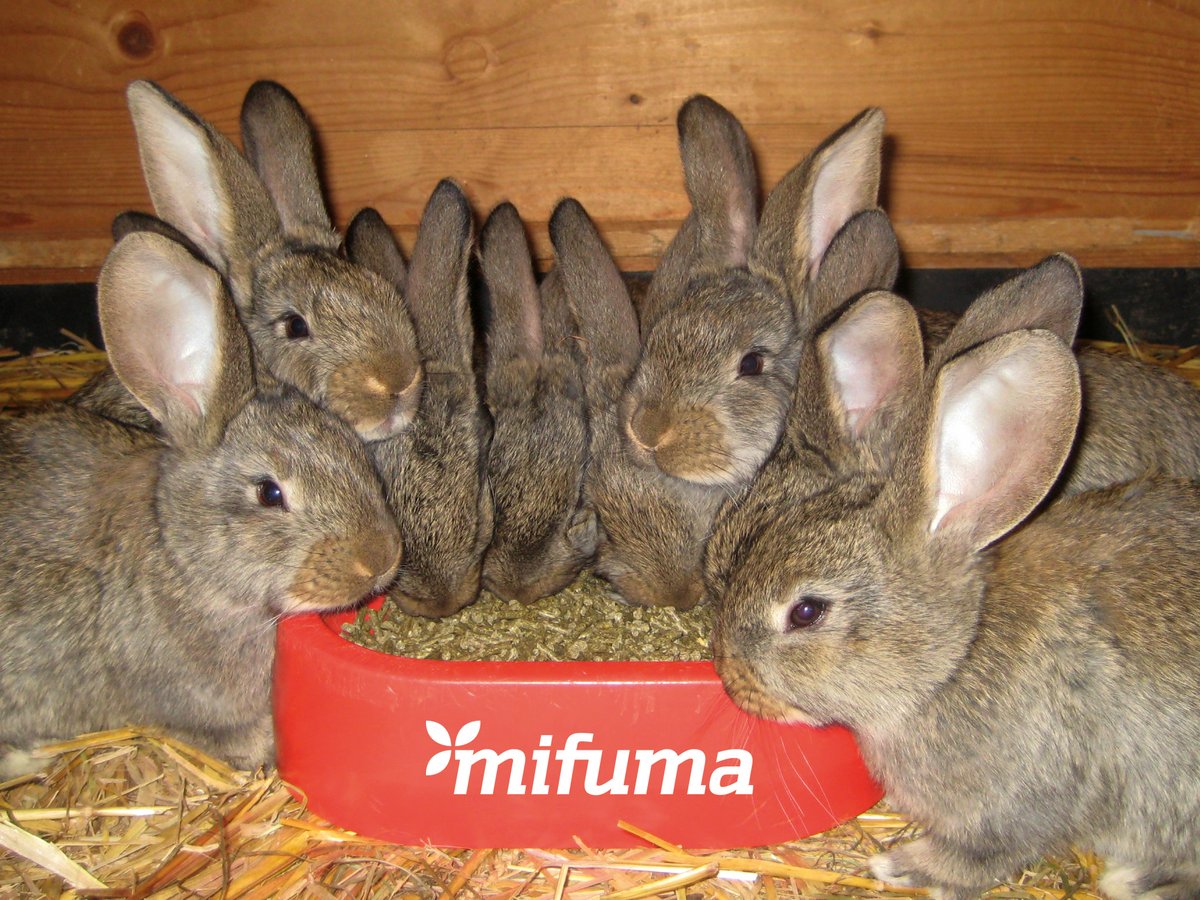
The right diet for your rabbits depends on the animals’ life stage and your feeding objectives. A young rabbit requires different feed than an adult animal or, for example, a pregnant doe – just as is the case with humans.
The rabbit in the wild
Rabbits are herbivores. Their stomach and intestines are designed to digest plant-based feed such as leaves and plant stems. In the wild, rabbits are able to select a ration that meets their nutritional requirements. Fresh feed consists of leaves and plants, vegetables, herbs, and grasses – everything a herbivore can find. The availability of green feed varies with the seasons. Depending on conditions, a wild rabbit may consume up to 60 percent of its body weight in green feed per day. For a rabbit weighing 2 kg, this equals about 1.2 kg of green feed daily.
For this reason, the rabbit’s digestive system is designed for a short retention time of feed in the digestive tract. Rabbits eat small amounts throughout the day. Feed is not transported through muscular contractions, but rather pushed from the stomach into the intestines by continuous intake. A constant supply of feed is therefore essential.
Domestic rabbits cannot be directly compared to wild rabbits. Depending on the breed, domestic rabbits may weigh three to five times more, meaning that some animals would theoretically need to consume up to 5 kg of green feed per day. Nutrient requirements vary according to life stage, sex, size, housing conditions, and performance. In addition, domestic rabbits depend entirely on the feed provided by their keeper. True choice is rarely possible, and limited availability of feed plants, garden waste, or leftover kitchen herbs can lead to nutrient deficiencies, particularly of vitamins.
With the exception of vitamin C, rabbits cannot synthesize vitamins themselves unless they are produced by intestinal microorganisms (such as vitamin K and B vitamins) and absorbed via caecotrophy. Vitamins are involved in numerous metabolic processes and are therefore essential.
Avoiding digestive disorders in rabbits
Different feeding strategies are used in rabbit husbandry. For breeders of fancy rabbits, feeding a complementary feed in combination with hay is the most common and safest method. Often, a combined feeding system is used, consisting of hay, compound feed, and – depending on seasonal availability – fresh and green feed. The compound feed is rationed according to the animals’ nutrient requirements during different life and performance stages.
Green feed includes all above-ground green plant parts such as grasses, herbs, and leaves with a high water content. Leaves and young shoots contain more protein, are more digestible, and are preferred over stems and older plant parts.
Fruit and vegetables may be included in the rabbit diet, but their sugar content must be considered. Fruit should remain an exception and may be offered only in small amounts as a treat. Even rabbits with poor appetite may be tempted with a small piece of apple. Fruit should never be a staple feed. Leafy vegetables such as lettuce and spinach, as well as root vegetables like carrots, fennel, or beetroot, are well suited and low in sugar. Supermarkets often discard vegetable leftovers such as kohlrabi leaves or carrot tops, which can be fed to rabbits. Flowers and meadow herbs are also readily accepted. A balanced green feeding strategy is essential.
The best feed for rabbits is good-quality hay. The crude fibre content ensures proper transport of feed from the stomach into the intestinal tract. Although rabbits are not rodents, they enjoy gnawing on branches. Branches from hazel, willow, or apple trees provide enrichment and promote natural tooth wear. Avoid sudden feed changes at all costs. Whether feeding dry or fresh feed, abrupt changes can disrupt digestion and upset the gastrointestinal balance.
Housing conditions strongly influence feeding practices. A keeper with a few rabbits has different options than someone managing 50 or 100 hutches. Regional availability of green feed, herbs, grasses, fruit, and vegetables depending on season and climate also affects feeding plans. By following basic feeding principles, you support the vitality and health of your rabbits.
Supporting the health of young rabbits
Rearing and feeding young rabbits can be challenging. The housing system plays a crucial role. Keeping one doe with a single litter is very different from managing multiple does and adult animals. The more rabbits housed together, the higher the risk of digestive issues – starting already with young animals.
Coccidia can be transmitted to young rabbits via the droppings of adult animals. Even if the doe shows no symptoms, young rabbits may develop reduced appetite, weight loss, or diarrhoea. Key factors include immune status, intestinal mucosa condition, and overall health. Hygiene in the housing system is equally important.
Your feeding strategy is your decision. What are your previous experiences?
If coccidiosis has occurred in your stock, it is advisable to rely on rabbit feed that supports coccidiosis management. In this case, feed the doe and the young rabbits from day 17 of life – when the young begin eating from the doe’s feeder – with a rabbit feed offering coccidiosis protection.
At Mifuma, you can choose between our pellets EnteroCare and Forte. EnteroCare is a high-quality rabbit feed with a comprehensive safety concept designed to reduce digestive disorders. Selected plant-based active substances from tropical and subtropical plants inhibit pathogens such as clostridia, E. coli, and coccidia. Secondary plant compounds and a prebiotic support balanced gut flora and strengthen the intestinal wall. The pH value in the digestive tract is also reduced. These components interact synergistically to support immune response and natural defence mechanisms.
While EnteroCare provides natural coccidiosis management, Forte contains a coccidiostat. This offers additional protection against intestinal parasites and supports healthy gut flora. High crude fibre levels and reduced protein, starch, and sugar ensure good digestibility and relieve the digestive system.
Expert tips for young rabbits
Once you choose a feed – either with natural coccidiosis management (EnteroCare) or with a coccidiostat (Forte) – feed only this product in combination with hay. Do not mix it with other feeds, as this reduces the effectiveness of the protection concept. Feed starter feeds only for the recommended period.
If you prefer feeding without coccidiosis management, we recommend Balance. It has a high crude fibre content and coarsely ground pellets. In addition to Balance and hay, Knabber-Max can be offered as a roughage source to promote tooth wear. Via drinking water, Darmfit by Röhnfried can be added to support gut health. Be cautious with fresh vegetables, fruit, herbs, and green feed. Excess fresh feed may overload the digestive tract and cause bloating or digestive disorders.
Feeding young rabbits from week 10–12 onwards
Regardless of previous feeding strategy, switch now to follow-on feed. Feed changes must always be gradual over at least two weeks. Start with 20 percent of the new feed and increase gradually.
Small breeds
Adult weight 2–3.5 kg and dwarf breeds. Recommended feeds: Mifuma Mini, Basis, Balance, Struktur-Müsli. Feed approx. 35 g per kg body weight daily, plus hay and fresh water.
Medium-sized breeds
Adult weight 2.5–5.5 kg. Suitable feeds: Plus, Balance, Struktur-Müsli, Kräuter. Feed 30–40 g per kg body weight.
Large and long-haired breeds
For large breeds, with an adult target weight of 4.5 kg or more, as well as for long-haired breeds, Mifuma Kombi and Multi are suitable. Before using either of these feeds, we recommend an intermediate step: since Kombi and Multi are very high in starch and the animals have previously received a low-starch feed, the transition should be carried out with particular care. First, switch the animals from the rearing feed to Plus or Balance. As with all feed changes, gradually mix the rearing feed with the follow-on feed over a period of two weeks. Then feed Plus or Balance for approximately six weeks. After that, transition the animals to the target feed Kombi or Multi. Ideally, allow the animals about two weeks to adapt to the new feed. Hay and fresh water should always be available ad libitum.
Preparing for exhibition season
Nutritional exhibition preparation begins approximately eight weeks before the planned show date. Fur quality and body weight are two factors that can be actively influenced through feeding. Ideally, the animals’ body weight should be monitored throughout the year by regular weighing. For show preparation, we recommend our Zucht + Schau. This special feed is suitable for all rabbit breeds. Sulphur-containing amino acids and valuable plant oils ensure excellent fur development with convincing fur quality and a beautiful coat shine. When changing the diet, we recommend carrying out the feed transition gradually over a period of two weeks so that the animals can adapt to the new feed and the metabolism is not stressed
Breeder's advice:
Pay close attention to the correct feed quantities: Zucht + Schau is a high-energy dry feed and should be fed at 30–35 g per kilogram of body weight. Always monitor the body weight of your animals regularly.
You can also combine your standard feed with small amounts of Mifuma Linamix. This supplementary feed made from extruded linseed and free from cereals ensures excellent fur quality, as linseed is naturally rich in fats and oils. It also supports the moulting process. Linseed is a natural source of valuable omega-3 fatty acids. In addition, the high vitamin E content in combination with organically bound selenium supports the nervous system and helps rabbits cope with the demands of the show period. Linamix can also be used after the animals return from a show, as rabbits with reduced appetite readily accept this dry feed. As with all supplements, adhere to the recommended quantities: feed Linamix in addition to the regular ration at 1–2 g per kilogram of body weight.
Breeder's advice:
Breeds with a reddish-brown coat can be optimally supported throughout the year in coat colour development with our Mifuma Möhrenkorn. Use this as a supplement in small amounts at 1.5 g per kilogram of body weight.
Points to consider for trouble-free breeding
A successful mating begins with the breeding condition of both the doe and the buck. Make sure that both animals are at their ideal body weight. If your rabbits need to lose some weight, a high-crude-fibre diet is recommended. Balance is ideally suited for this purpose, as it provides a high crude fibre and crude protein content combined with a comparatively low energy level. Feed Balance at 30–40 g per kilogram of body weight, together with hay and fresh water.
Improved breeding condition can also be supported by our Zucht Perle. This dry feed, originally developed for commercial rabbit breeding, promotes strong heat activity in does, improved sperm quality, and demonstrably larger litters. This supplementary feed is administered for ten days at 15 g per animal per day; on the eleventh day, the doe and buck are paired for mating. Zucht Perle can be fed again from two days before up to eight days after the expected kindling date in order to improve the doe’s milk yield.
Nutrition of the doe
Feed the doe with our Zucht + Schau throughout the entire gestation period. During the final third of pregnancy, Zucht + Schau should be offered ad libitum, i.e. freely available at all times. The nutrients, minerals, trace elements, and vitamins contained in the feed meet the increased requirements of pregnant animals. Zucht + Schau should also be continued after kindling, as the balanced ratio of energy to protein and the amino acids derived from valuable extruded linseed support high milk yield and provide the doe with the energy she urgently needs.
If the doe and the young rabbits are housed in the same enclosure, it is time to switch to EnteroCare on day 17 of life, as the young begin to eat from the doe’s feeder at this stage. Additional energy can now be provided to the adult doe by offering our cereal-free Linamix. Offer Linamix in a small bowl or on a plate. The doe will eagerly consume the Linamix within a very short time. Please ensure that the young rabbits do not have access to Zucht + Schau or Linamix: due to their high nutrient density and fat and oil content, these feeds are ideally suited for the high-performing mother animal but are not suitable for young rabbits.