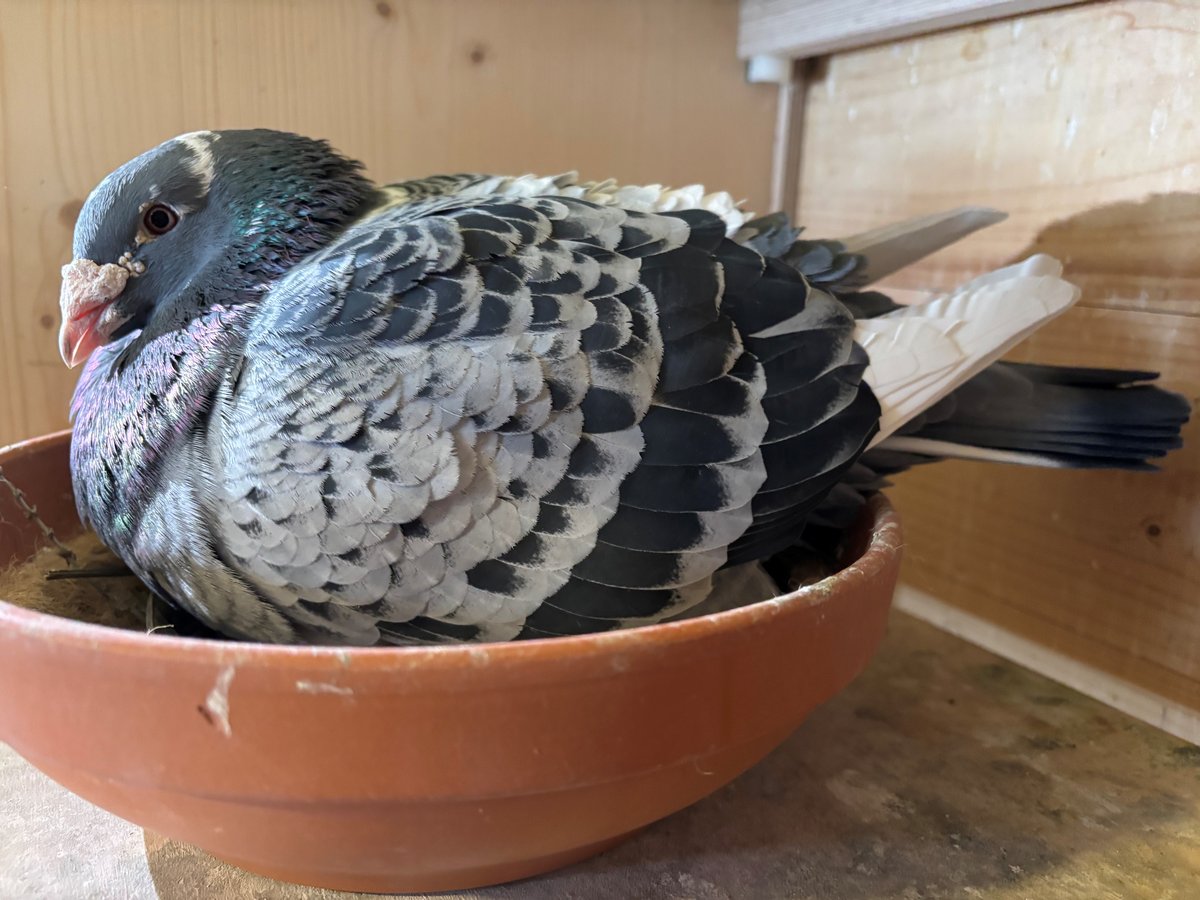
Successful breeding does not begin with pairing the birds, but with clear and thoughtful preparation. Those who want to raise powerful, vital young pigeons must establish the foundations early. Breeding is not a coincidence, but the result of good planning and consistent implementation.
Healthy pigeons are the prerequisite
The health of the breeding pigeons always comes first. Breeding only makes sense with healthy, resilient animals. All pigeons should be fully vaccinated, at least against PMV, well before pairing. A thorough examination by a knowledgeable veterinarian is also recommended. Hidden infections, parasites, or respiratory problems drain energy and weaken the pigeons precisely when they need to perform at their best. Breeding means responsibility. Only healthy pigeons can pass on vitality, resilience, and readiness to perform to the next generation.
Winter breeding and light management
Especially in winter breeding, light plays a crucial role. Short days signal rest to the organism, while long days indicate activity and readiness to reproduce. Therefore, the day should be artificially extended before pairing. A consistent lighting schedule, for example from 6:00 to 20:00, has proven effective. It is important that this light management does not start only after pairing the birds, but ideally about 14 days beforehand. This allows the pigeons to gradually get in shape, activates their metabolism, and harmoniously stimulates their breeding drive. Additionally, this phase can be sensibly supported with vitamins. They help the organism adjust to the upcoming strain and promote condition, fertility, and overall vitality.
Besides light and health, rest and regularity are crucial. A fixed daily routine, clean lofts, and a stress-free environment help the pigeons focus entirely on breeding. Only when these prerequisites are met should the pairs be put together.
Feeding as a central element of breeding
During breeding, the demands on metabolism increase significantly. The need for protein, minerals, trace elements, and vitamins is considerably higher than during the normal course of the year. The pigeons must form eggs, incubate them, and later reliably feed their young.
High-quality breeding mixtures from Mifuma, such as the new breeding mixture Zucht Pro, provide a stable foundation for this and accompany the pigeons through all phases of breeding without unnecessarily burdening their metabolism. The decisive factor is not only the quantity but especially the quality of the nutrients contained.
Protein and the formation of crop milk
Protein is one of the most important building blocks in breeding. It is needed for the development of the embryo and plays a central role in the formation of crop milk. This first food is crucial for the start of the young pigeons' lives.
If high-quality protein is lacking, the quality of the crop milk suffers. Young pigeons grow unevenly, appear weaker, and are more susceptible. Modern breeding concepts therefore consciously rely on particularly well-available protein.
An integral part of this is insect protein, which Mifuma uses in the form of the Vollkraft Perle. This is included in Zucht + Mauser Sonderklasse as well as Zucht + Mauser Premium and provides easily digestible, high-quality protein. Especially in the sensitive breeding phase, both old and young pigeons benefit equally from it.
Breeding process
After laying, the actual incubation phase begins. The incubation period usually lasts 17 days, calculated from the time the hen lays the second egg. After 4 to 5 days, a careful check can already reveal whether the egg is fertilized. The embryo becomes visible, fine blood vessels run through the egg. A small moment that says a lot about the further breeding success.
During incubation, rest, consistent feeding, and good mineral supply are particularly important.
Grit, stomach stones, and calcium
In addition to the main feed, grit and stomach stones should never be missing. They are indispensable for digestion and ensure that the feed is optimally utilized. A very good mineral supply is offered by Oremin. Ideally, it should be offered fresh to the pigeons daily. It is very well accepted by the pigeons.
Calcium is equally crucial. It is needed for the formation of stable eggshells. Insufficient supply leads to thin or brittle shells and additionally burdens the hen. Continuous calcium supply is therefore mandatory throughout the breeding period.
After hatching, a particularly sensitive phase begins. The young pigeons are initially fed with crop milk, later with pre-digested grain feed. With good preparation, the young show full crops, calm behavior, and even growth. Usually, the young pigeons are ringed after 5 to 6 days. At this point, they are strong enough.
The hope for the ace
At the end of every breeding season, there is a thought that connects all racing pigeon breeders. The hope that among the young pigeons, a very special bird will grow. A future ace, a performer, or a future breeding bird.
This hope does not arise by chance. It is the result of vital parent birds, thoughtful preparation, adapted light management, high-quality feeding, and consistent care. Those who put these building blocks together correctly give their young pigeons the best possible start in life.
I wish you the best of luck in breeding that very ace.
Robert Maaß