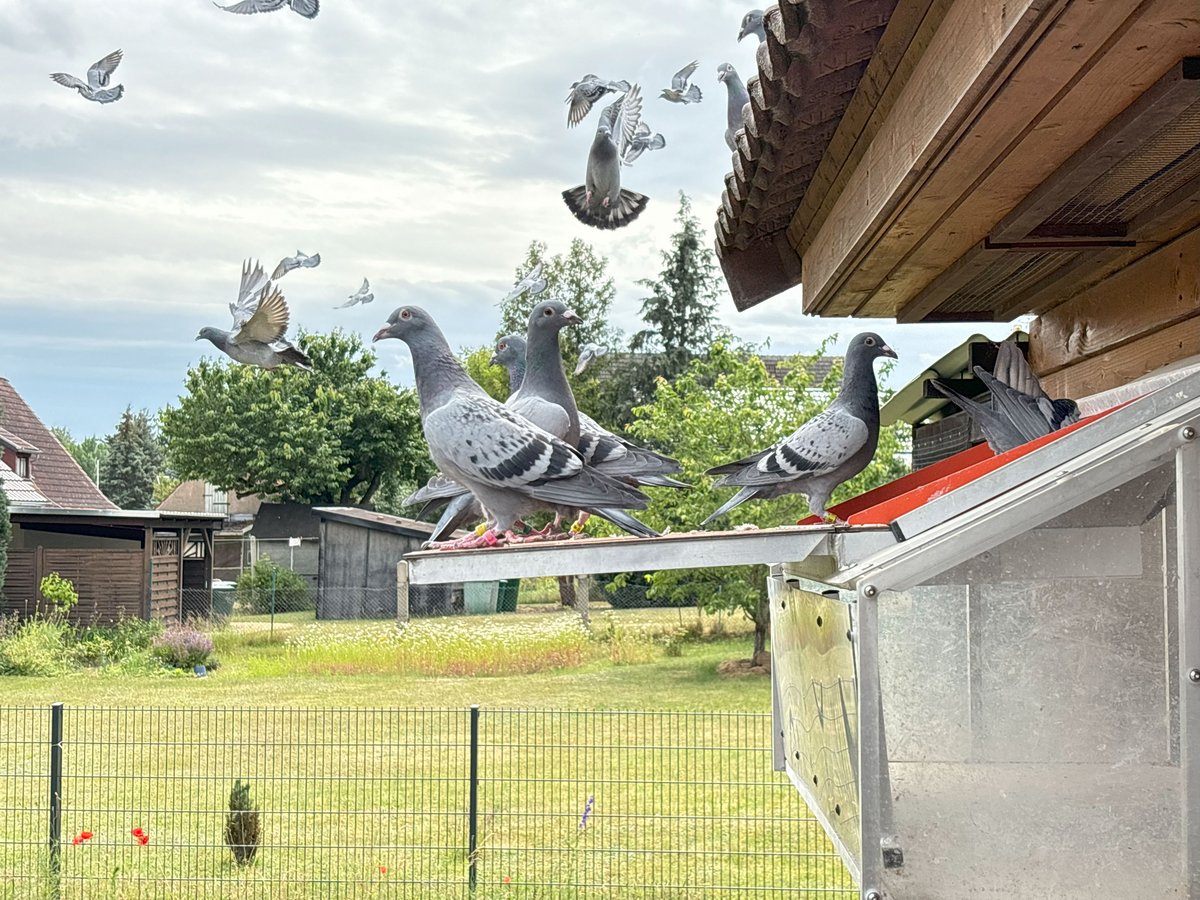
The travel season is the most demanding time for our carrier pigeons. Proper care determines performance, regeneration, and ultimately success in competition. In this article, I explain what breeders should pay particular attention to during the travel season.
1. Training – The Balance Between Stress and Recovery
In addition to feeding, training plays a crucial role. At the beginning of the season, the pigeons should train well at home and ideally fly intensively for up to an hour. This builds the condition for the entire season. If they voluntarily fly long rounds and move away from the house, this is a good sign of the animals' fitness. As the season progresses, training should be adjusted. Especially for longer distances, I recommend giving the pigeons some rest between flights. At the beginning of the week, training can still be more intensive, while shorter training sessions are advisable towards the end of the week to avoid overloading.
2. The Right Feeding – Tailored to the Stress
A balanced diet is essential to provide the pigeons with the necessary energy and ensure quick regeneration. At Mifuma, we rely on high-quality mixtures that are precisely tailored to the needs of the pigeons.
Beginning of the Week – Light, Protein-Rich Diet for Regeneration After a race, pigeons primarily need proteins for muscle regeneration and light carbohydrates to replenish their reserves. Here, we recommend Reise Light or a mixture with a high barley and rice content, such as Relax. Electrolytes and vitamins in the drinking water also help with quick recovery.
Weekend – Energy Build-Up for the Next Flight From midweek, the focus must be on energy supply. The carbohydrate stores should be filled to have enough strength for the upcoming journey. Here, more energy-rich feed mixtures such as Elite Racing, Power-Mix, and Energy are used, which contain corn, sunflower seeds, and hemp seeds. Additionally, the fat content can be slightly increased by adding peanuts or oilseeds.
Day of Use – Last Feeding Before Deployment The last meal before transport should be easily digestible and not burden the pigeons. Easily digestible food with quickly available carbohydrates, such as peeled sunflowers or light corn, is ideal. The pigeons should not be overfed, as a full crop increases transport stress. Therefore, food residues should also be removed from the loft in good time before deployment.
A bath for relaxation before deployment is usually gladly accepted by the pigeons.
3. Avoid Feed Changes – Continuity as a Success Factor
A sudden change in feed can cause digestive problems and disrupt the pigeons' entire metabolism. Therefore, a proven feeding concept should be adhered to during the season. Slight adjustments within a familiar feed mixture are possible, but abrupt changes are counterproductive. Proven feed lines like the Mifuma Travel Series ensure continuous supply without unnecessary stress on the organism.
4. System
There are various travel systems to successfully participate in races with your pigeons. In addition to the classic widowhood, more and more breeders are relying on the Total Widowhood system, where both males and females participate in the race.
Each system has its advantages and disadvantages. Breeding young animals before the season or playing with dry widowhood – where no young pigeons are bred in the travel loft – is not decisive for success. It is more important to choose a system and stick to it consistently, especially during the season. Changing the system can negatively affect the pigeons' performance.
Conclusion
A well-thought-out feeding strategy, adjusted training, and consistent supply are crucial for success in the travel season. Those who provide their pigeons with needs-based care and avoid stress through unnecessary feed changes lay the foundation for healthy and capable athletes. With Mifuma's high-quality mixtures, every breeder can optimally prepare their pigeons for races and achieve long-term success.
Good luck and a successful travel season!
"Good Flight" 2025 wishes Robert Maaß