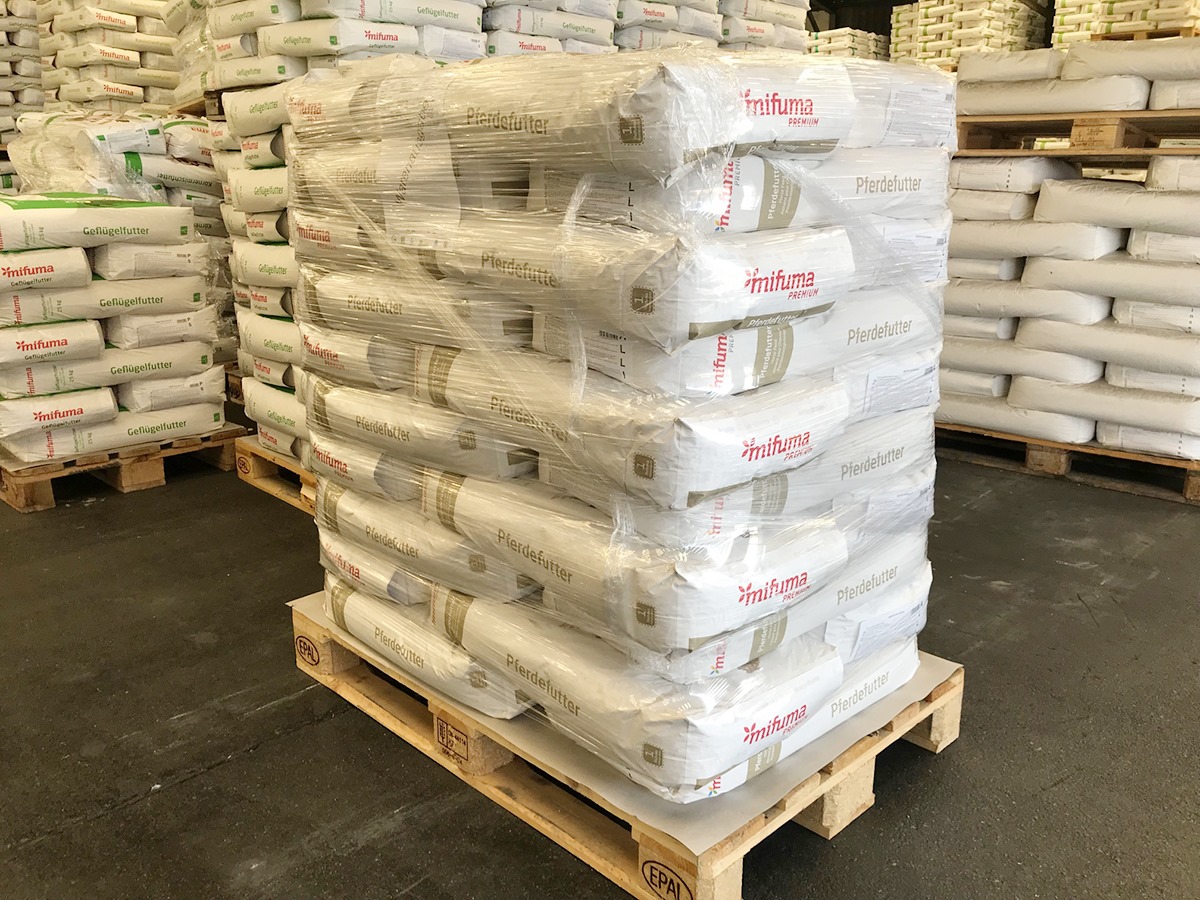
Animal feed contains many valuable ingredients such as vitamins, minerals, and proteins. When temperatures rise, humidity can accumulate in storage containers or feed bags. The result: the feed begins to sweat. Combined with moisture, this creates an ideal climate for mold and bacteria.
Chicken feed: Sensitive to moisture
Chicken feed, especially laying mash or grain mixtures, quickly absorbs moisture from the air. It clumps or starts to smell. Therefore, store it:
- Dry and well-ventilated
- Not directly on the ground (e.g., on pallets)
- In closed but breathable containers
Avoid storing in airtight plastic bags in the heat – condensation is inevitable here.
Rabbit feed: Particularly prone to mold
Structured feeds such as hay, alfalfa mix, or pellets with vegetable or herb content are sensitive. Pay attention to rabbit feed:
- Cool, airy storage locations
- Regular checks for smell and appearance
- Quick feeding after opening
A musty smell or visible discoloration are clear signals for feed that is no longer good.
Horse feed: Large quantities properly protected
Horse feed is often stored in bags. Better here is:
- Storage in feed bins with lids
- No direct sunlight
- Do not tear open bags if they are not used immediately
Muesli and mash mixtures with high oil content can become rancid in the heat – which not only deters horses but also poses health risks.
Pigeon feed: Keep an eye on oilseeds
High-quality grain mixtures for pigeons contain oilseeds such as sunflower seeds, hemp, or linseed. These spoil faster in warmth. Our tips:
- Store dark and cool
- Seal opened bags airtight
- Store feed open for a maximum of 6 weeks
Regular reshuffling, e.g., in a feed bin, can help avoid condensation.
Our tips for proper storage in summer:
- Always store animal feed dry, cool, and as dark as possible.
- Use feed bins or boxes that protect against humidity and pests.
- Regularly check opened feed for changes in smell, consistency, and color.
- In high temperatures, buy smaller quantities that you can use quickly.
Conclusion: Ensure quality – protect animals
Proper storage of animal feed not only protects against mold and spoilage but also preserves the important nutrients your animals need. Especially for chickens, rabbits, horses, and pigeons, it is worth adjusting storage and handling to the season.
Because only with fresh, impeccable feed will your animals remain healthy, vital – and satisfied!